
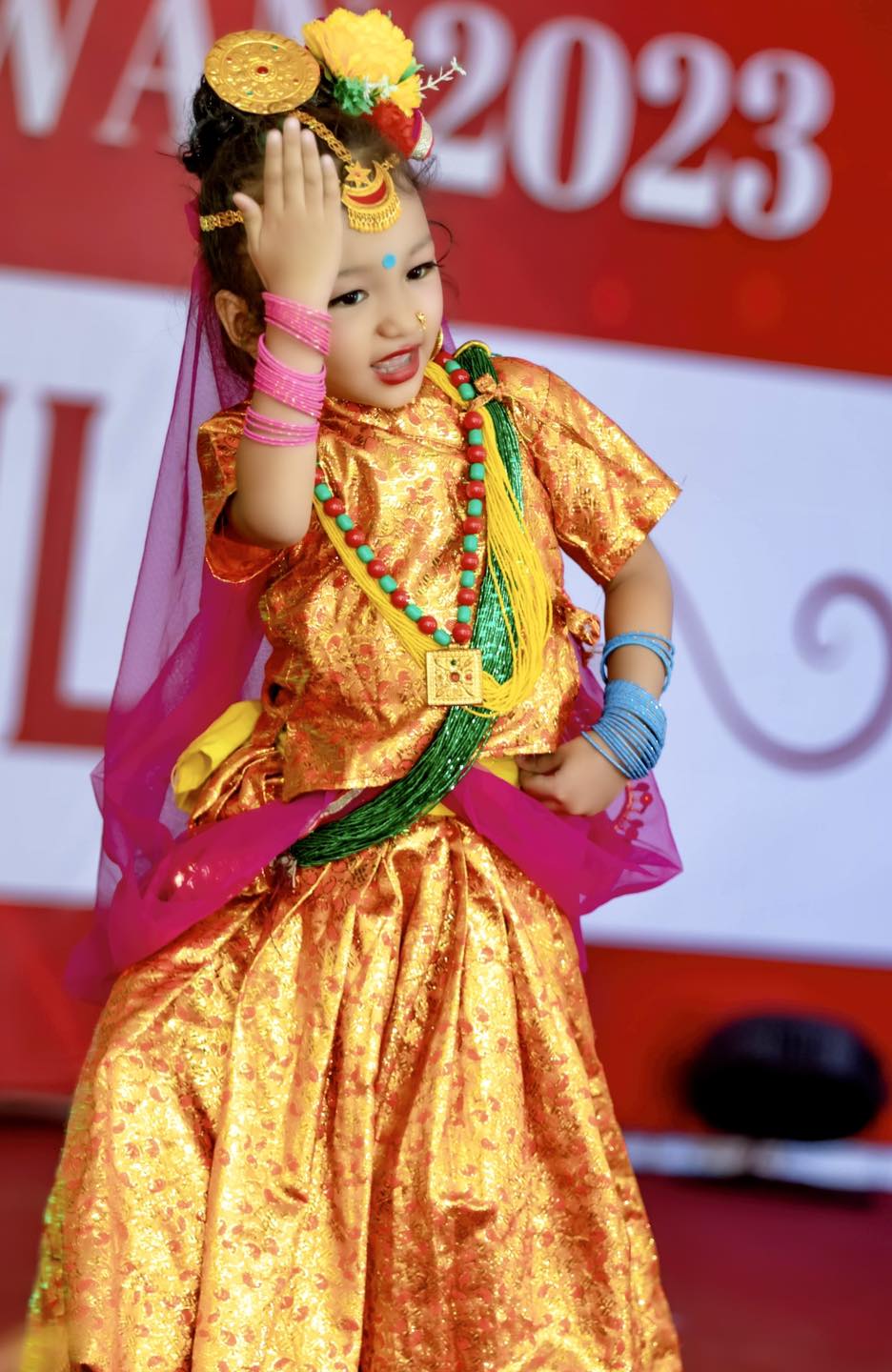
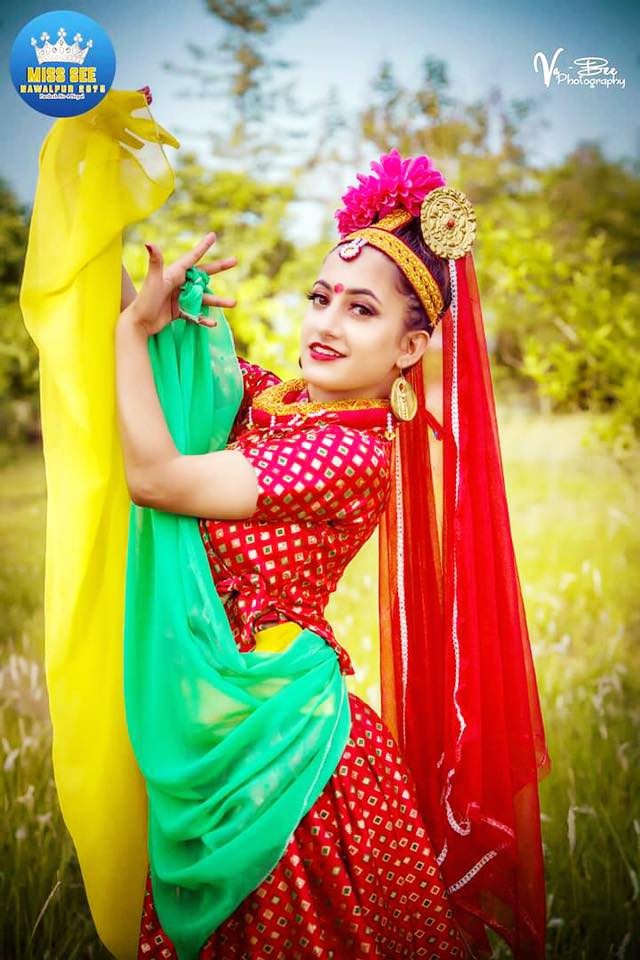
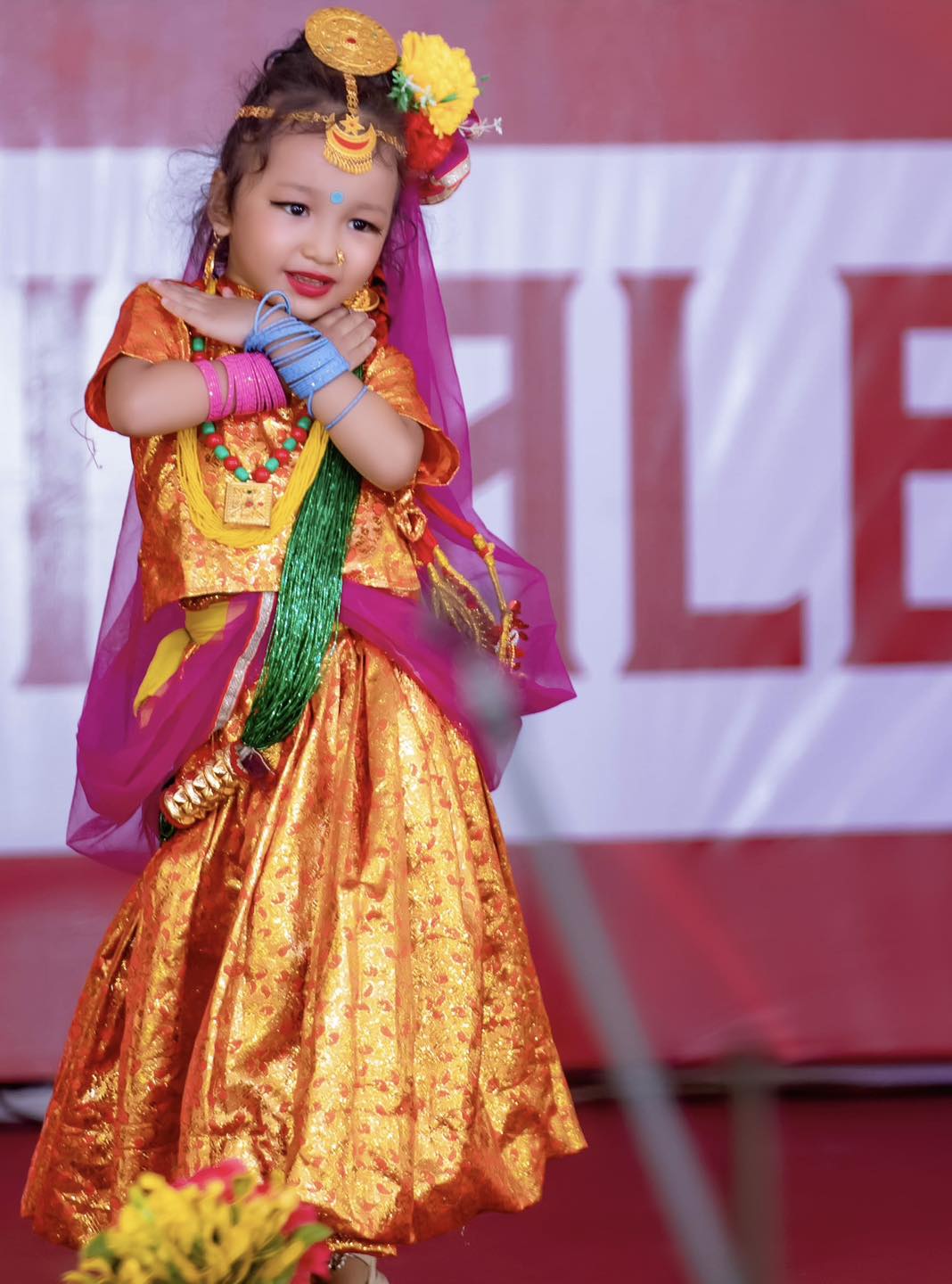
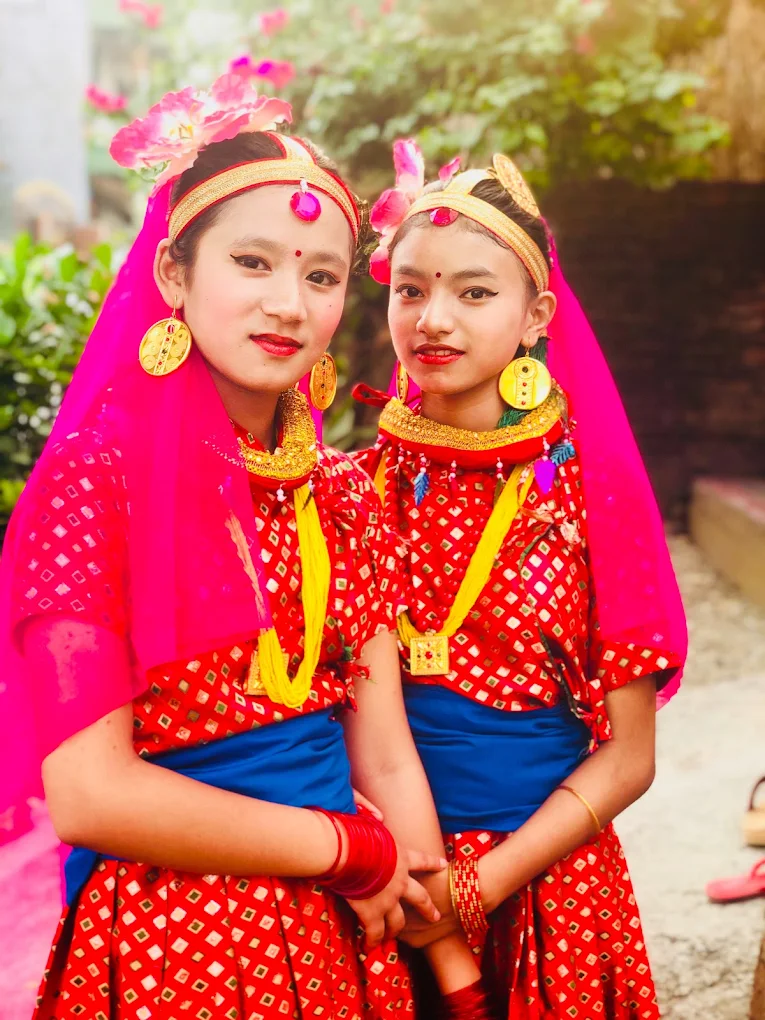
The Maruni dress in Nepal is a quintessential element of the vibrant and ancient Maruni dance, which is deeply ingrained in the cultural fabric of several communities, most notably the Magar people, but also widely adopted by Gurung, Kirat, Khas, and other groups across the hilly regions of Nepal and even among Nepali diaspora communities in India (Sikkim, Darjeeling, Assam), Bhutan, and Myanmar.
This elaborate attire is not just clothing; it’s a costume designed for performance, rich in color, ornamentation, and symbolism. The dance itself is often performed during major festivals like Dashain and Tihar, as well as at weddings, community gatherings, and other celebratory occasions, frequently accompanied by the traditional Naumati Baja (a nine-instrument orchestra). The dress helps to visually convey themes of celebration, the triumph of good over evil, and various folk narratives.
Here’s a detailed look at the components and significance of the Maruni dress in Nepal:
I. For the “Maruni” Dancers (traditionally male, now also female):
Historically, Maruni dance was often performed by men cross-dressing as women (a practice called “Nachne” or “Nachuwa”), a tradition that still exists in some regions. However, contemporary performances increasingly feature women as Maruni dancers. Regardless of gender, the attire for the Maruni role is highly embellished and designed to embody femininity and grace.
- Vibrant Saree or Lehenga (Skirt) & Choli (Blouse):
- Primary Garment: The main part of the dress is typically a brightly colored silk saree or a voluminous lehenga (long, flowing skirt).
- Colors: Common colors are vibrant reds, emerald greens, royal blues, sunny yellows, and deep maroons. These colors are chosen for their visual impact and often symbolize auspiciousness, energy, and celebration.
- Fabric and Design: The fabric is often luxurious, with intricate designs, brocade work, zari (gold or silver thread) embroidery, mirror work, or traditional Nepali patterns. The intention is to make the dancer visually stunning and eye-catching.
- Choli: A fitted blouse is worn with the saree or lehenga. This is frequently a Chaubandi Cholo (a traditional double-breasted blouse tied at the sides), which can also be highly decorated.
- Patuka (Waistband):
- A long, often decorated, piece of cloth wrapped tightly around the waist over the saree or lehenga. It helps to define the dancer’s form and adds another layer of visual detail.
- Heavy and Elaborate Jewelry (Gahana):
- This is one of the most distinctive features of the Maruni dress, making the dancers appear resplendent and almost divine. Jewelry is typically made of gold, silver, and often includes precious or semi-precious stones like coral and turquoise.
- Sirbandi and Sirful: Intricate head ornaments worn on the forehead and the crown of the head, often with chains or dangling elements.
- Nathiya (नथिया) / Bulaki (बुलाकी) / Phuli (फुली): Prominent nose rings or smaller nose studs. The Nathiya can be quite large and decorative.
- Yarling (यार्लिङ) / Kaanthi (कान्थी) / Jhumka: Large, often circular or bell-shaped earrings that draw attention to the face.
- Necklaces (Kantha Mala, Hamel, Naugedi, Pote, Tilhari): Multiple layers of necklaces are common, ranging from close-fitting chokers to long, multi-stringed pieces. These often include gold ornaments, strings of colorful glass beads (pote), and the specific gold pendant on green beads called tilhari for married women.
- Bangles (Chura/Bala): Numerous bangles worn on the wrists, often in gold or silver.
- Anklets (Kalli/Payal) with Ghungroo: Ornaments worn on the ankles, sometimes with small bells (ghungroo) attached, which produce rhythmic sounds that synchronize with the dance movements.
- Bold Makeup:
- Dancers use dramatic makeup to enhance their facial expressions and ensure visibility to the audience. This includes:
- Heavy kajal (kohl) and eyeliner to accentuate the eyes, creating an expressive gaze.
- Bright, prominent lipstick.
- Decorative forehead designs, such as a prominent tika or painted patterns, symbolizing beauty and auspiciousness.
- Dancers use dramatic makeup to enhance their facial expressions and ensure visibility to the audience. This includes:
- Hair Accessories:
- Hair is typically tied up, often in a neat bun or an elaborate braid, and adorned with fresh flowers (like marigolds or jasmine), decorative hairpins, or ornamental nets.
II. For the Male Accompanying Dancers/Musicians (“Madaley” or “Dhatu Waray”):
While the Maruni dancer is the star, the male performers who accompany them (often playing the madal drum) also wear traditional attire, though it is usually simpler.
- Daura Suruwal: The traditional national dress of Nepal, consisting of a knee-length double-breasted top (Daura) and loose-fitting trousers (Suruwal).
- Waistcoat or Jacket: A traditional waistcoat or a simple jacket is often worn over the Daura Suruwal.
- Patuka: A simple waistband.
- Dhaka Topi: The distinctive traditional Nepali cap.
- Dhatu Waray (Clown/Joker): An important accompanying character who provides comic relief and narration. Their attire is usually less formal, possibly a simple dhoti and shirt, but they might wear exaggerated masks or apply comical makeup.
Reviews
There are no reviews yet.