
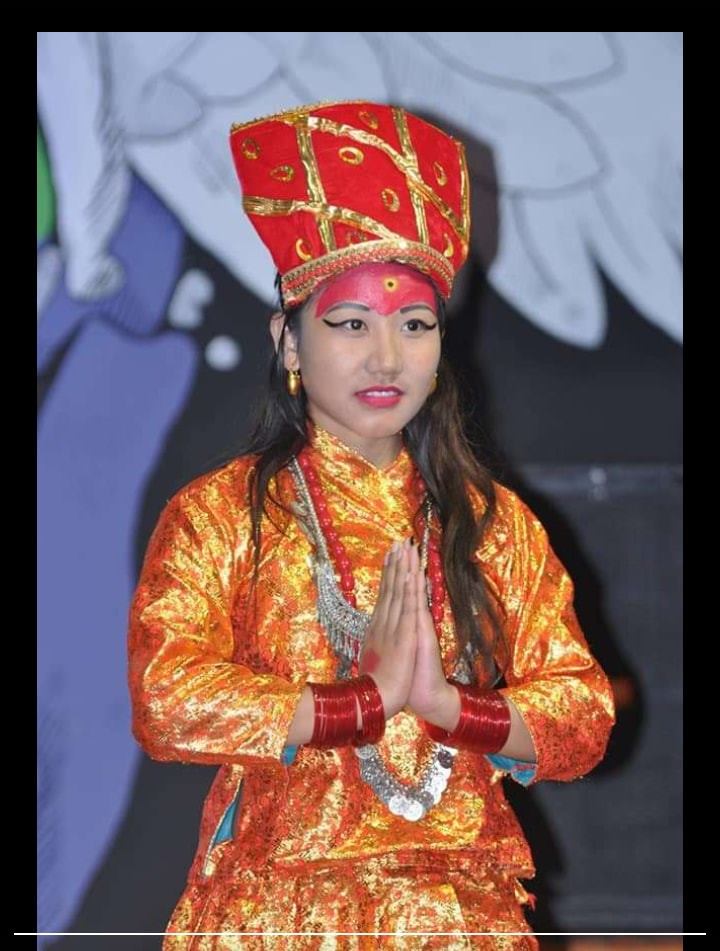
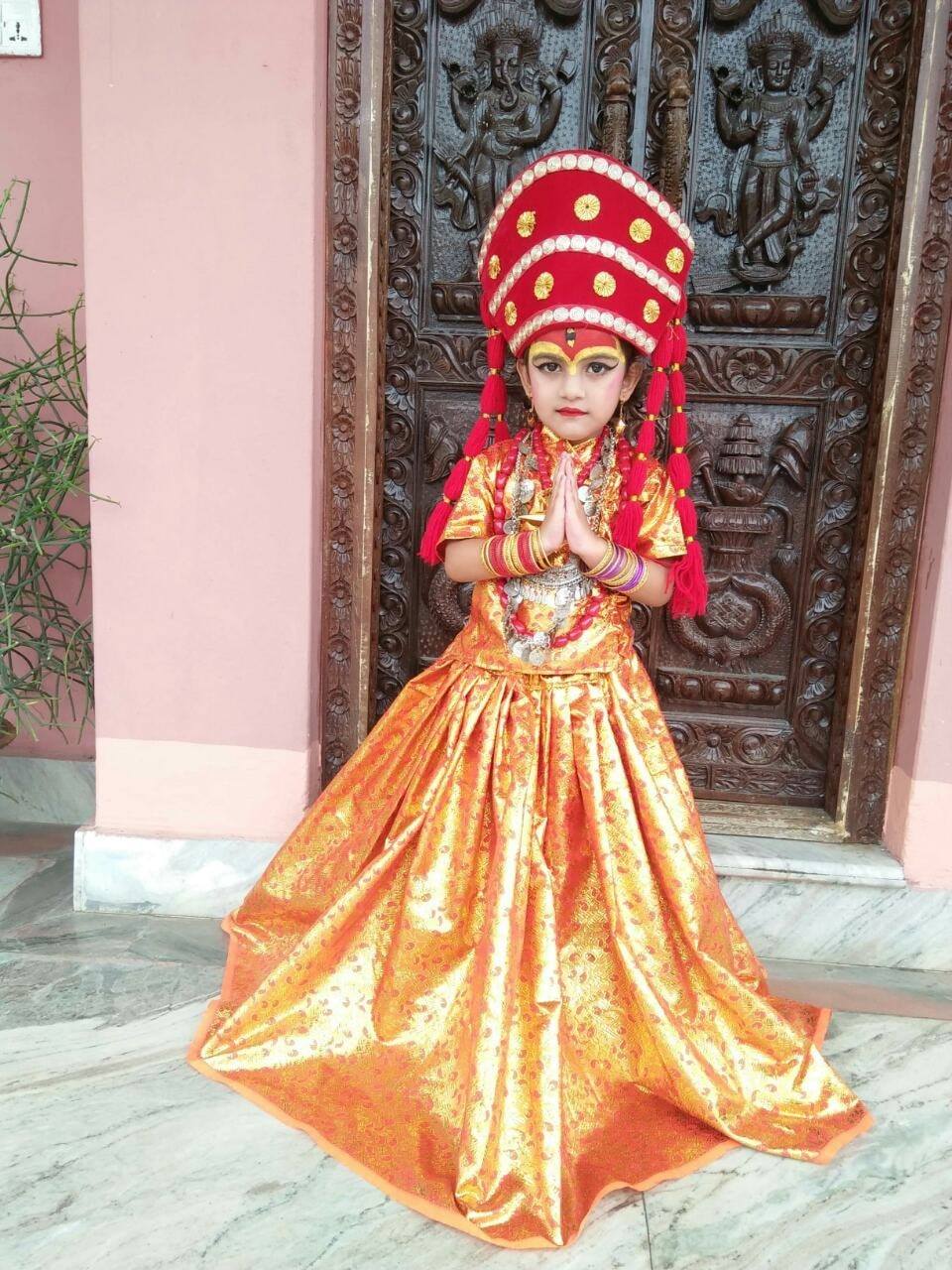
The “Kumari dress” refers to the highly distinctive and sacred attire worn by the Kumari, the Living Goddess of Nepal. This tradition, deeply rooted in the Newar community of the Kathmandu Valley, involves selecting a pre-pubescent girl from the Shakya or Bajracharya (Buddhist Newar) clan to be revered as the living incarnation of the Hindu goddess Taleju (a manifestation of Durga). Her dress is central to her divine persona and plays a crucial role in her public appearances and ceremonial duties.
The Kumari’s dress is not merely clothing; it’s a ritualistic costume that transforms the young girl into a divine embodiment.
Key Elements of the Kumari Dress and its Significance:
- Red Gown/Dress (Jama/Bhoto):
- Primary Color: The most striking feature is the dominance of bright red. Red is a highly auspicious color in Hindu and Buddhist traditions, symbolizing power, purity, vitality, and divinity. It is the color of goddesses like Durga and Taleju.
- Style: The Kumari wears a full-length, flowing red gown or cloak (Jama) that covers her down to her feet. Underneath, she wears a red Bhoto (a traditional shirt/tunic). The garments are typically made of silk or other rich fabrics.
- Symbolism: The red dress immediately identifies her as a divine figure and reinforces her connection to the powerful goddesses she embodies.
- Gold Jewelry (Gahana):
- The Kumari is adorned with heavy and elaborate gold jewelry. This not only signifies her divine status and the reverence she commands but also reflects traditional Newar artistry and the wealth associated with the goddess.
- Prominent Pieces:
- Tayoo (तयौ): A highly significant gold necklace, often long and ornate, with a central pendant. It’s a key piece of Newar ceremonial jewelry.
- Hansuli (हासुली): A rigid gold or silver necklace worn around the neck.
- Naugedi (नौगेदी): A multi-stringed gold necklace.
- Kantha (कण्ठा): A close-fitting necklace.
- Earrings (e.g., Nyapu Sikha, Lunswan): Large, intricately designed gold earrings.
- Bangles (Lakhanchā): Gold bracelets.
- Head Ornaments (Sirbandi, Sirful): Gold pieces worn on the forehead and hair.
- Symbolism: Gold is considered a pure and auspicious metal. The quantity and elaborateness of the jewelry emphasize her divine wealth and blessings.
- Unique Makeup:
- The Third Eye (Agni Chakshu / Tri-netra): This is perhaps the most iconic and profound element of the Kumari’s appearance. A large, stylized eye is painted in black and gold on her forehead between her eyebrows.
- Symbolism: The third eye represents her divine insight, omniscience, and ability to see beyond the ordinary human realm. It signifies her spiritual power and connection to the goddess Durga/Taleju, who is often depicted with a third eye. It’s believed to be a “fire eye” that can destroy evil.
- Kajal (Kohl) and Eyeliner: Her eyes are heavily lined with black kajal and eyeliner, making them appear large, deep, and mesmerizing. This enhances her serene yet powerful gaze.
- Red Tika (Bhrigu): A prominent red tika is applied, often above the third eye, using vermilion powder, rock crystal powder, and scented kumkum. It represents cosmic energy, wealth, and a bright future.
- The Third Eye (Agni Chakshu / Tri-netra): This is perhaps the most iconic and profound element of the Kumari’s appearance. A large, stylized eye is painted in black and gold on her forehead between her eyebrows.
- Hair Styling (Topknot):
- The Kumari’s hair is always styled into a tight topknot (bun) on the crown of her head.
- Adornments: It’s often decorated with a red ribbon and sometimes fresh, sweet-smelling flowers.
- Symbolism: The topknot is a traditional way to style hair for ascetics and deities, suggesting spiritual focus and purity.
- Bare Feet / Red Stockings:
- The Kumari’s feet are considered sacred and are not allowed to touch the ground outside her residence (Kumari Ghar) during her reign. When she is transported for ceremonies (often in a golden palanquin), her feet are either bare or covered in red stockings. She does not wear shoes.
- Symbolism: Her feet not touching the ground signifies her divine detachment from the earthly realm and her status as a living goddess. Devotees often touch her feet for blessings.
Reviews
There are no reviews yet.