
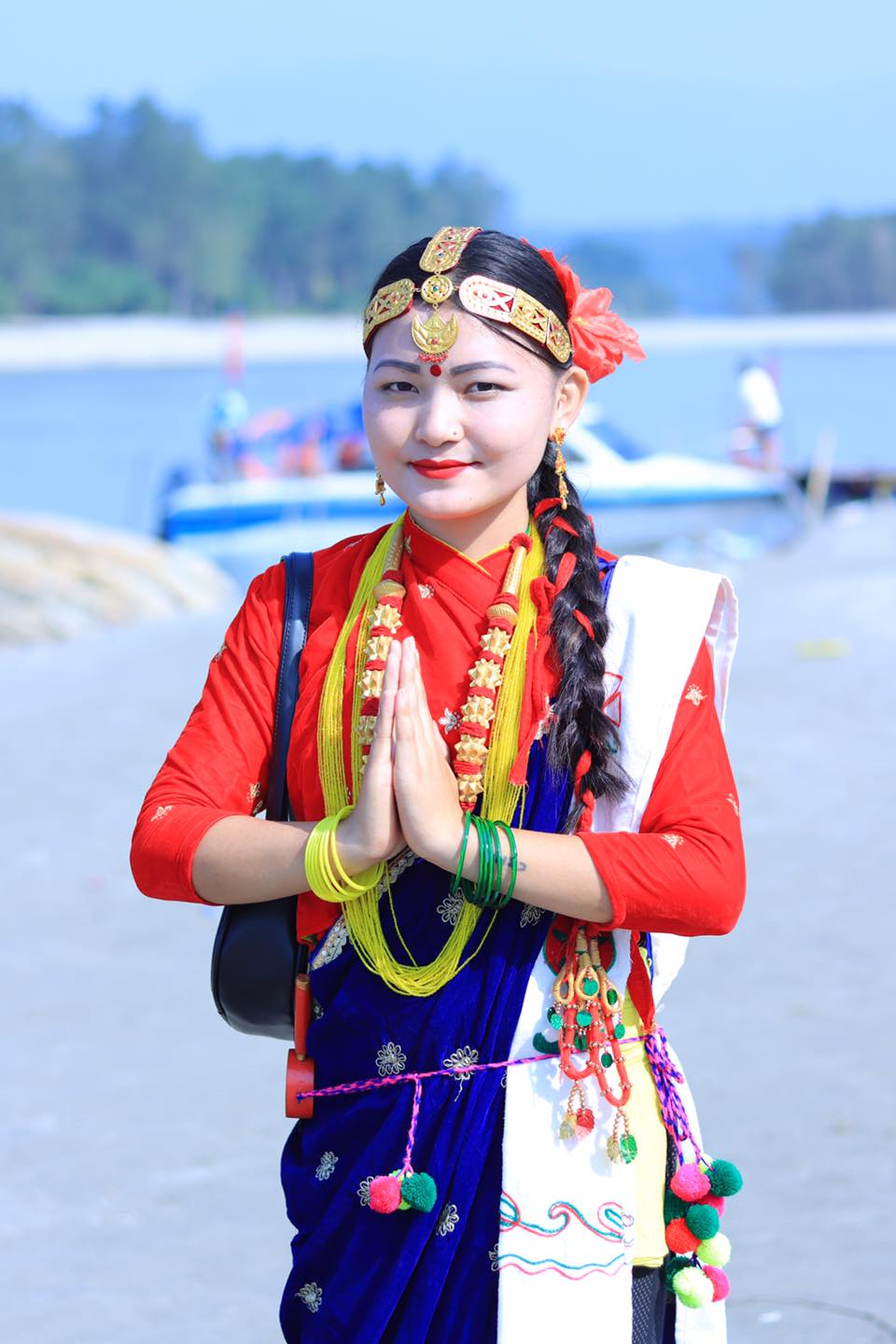
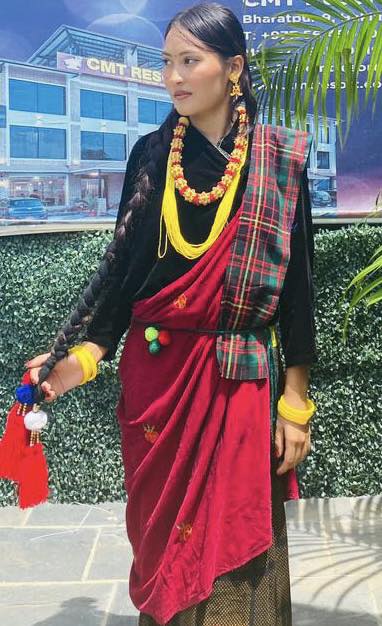
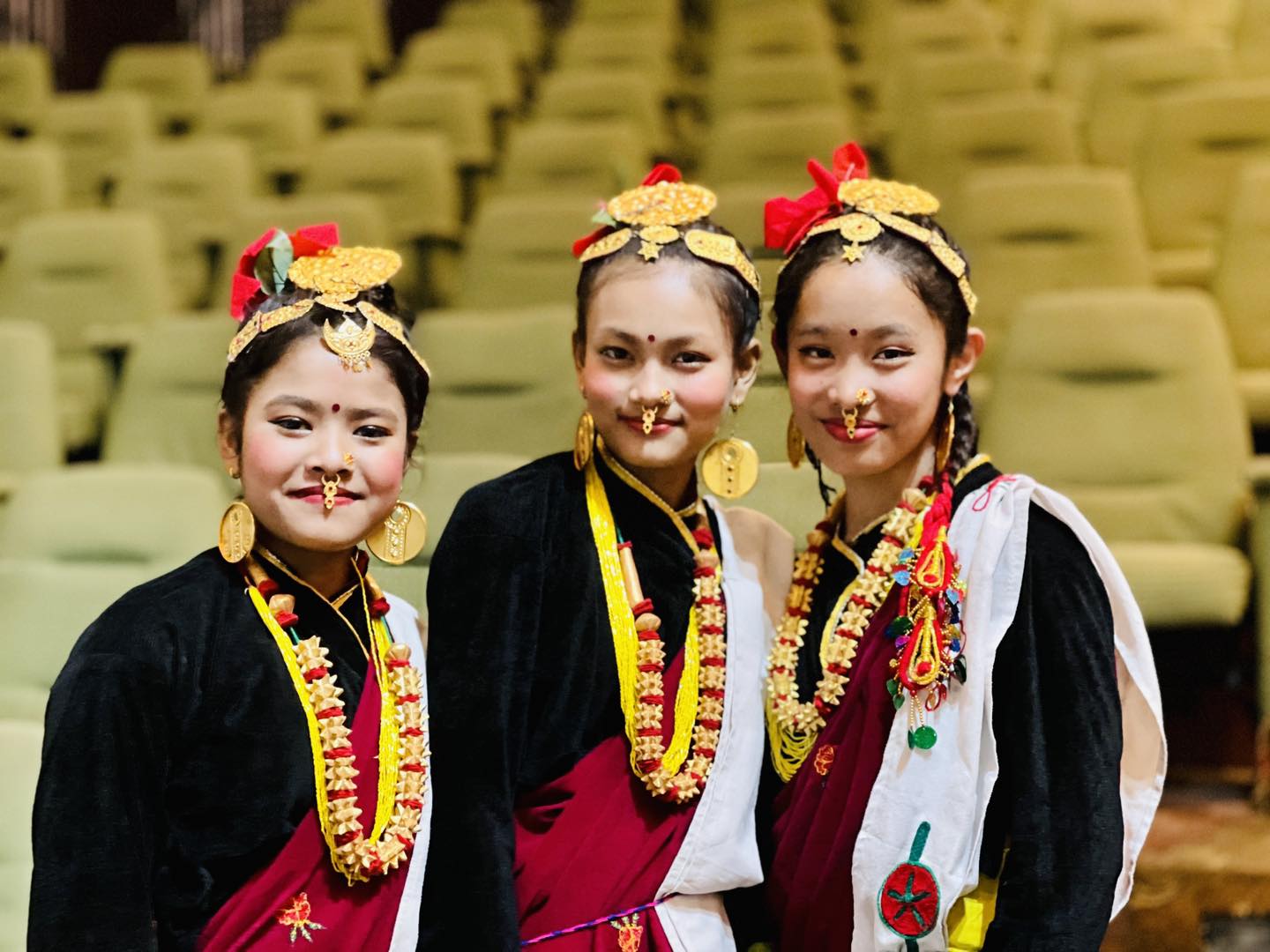
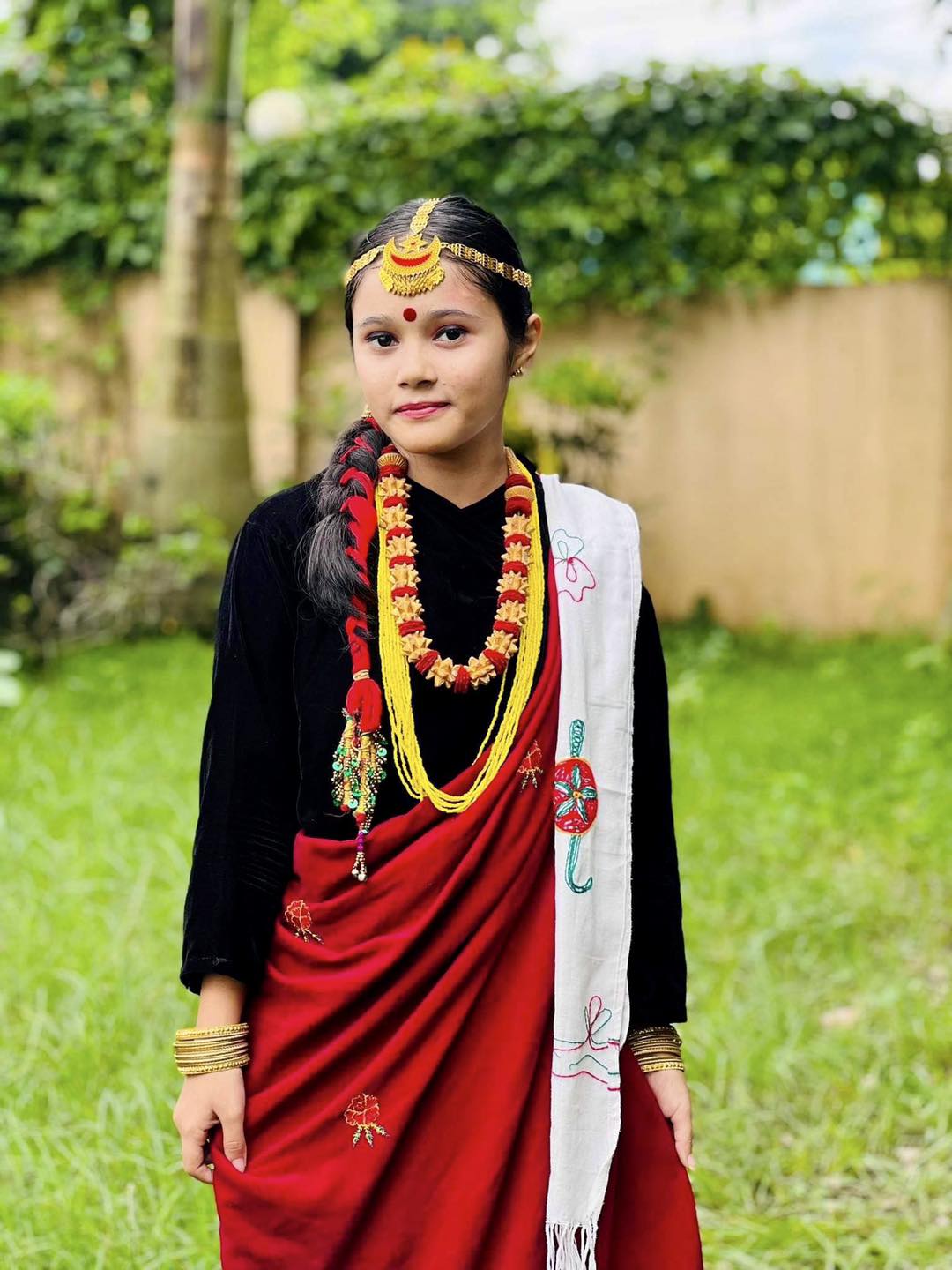
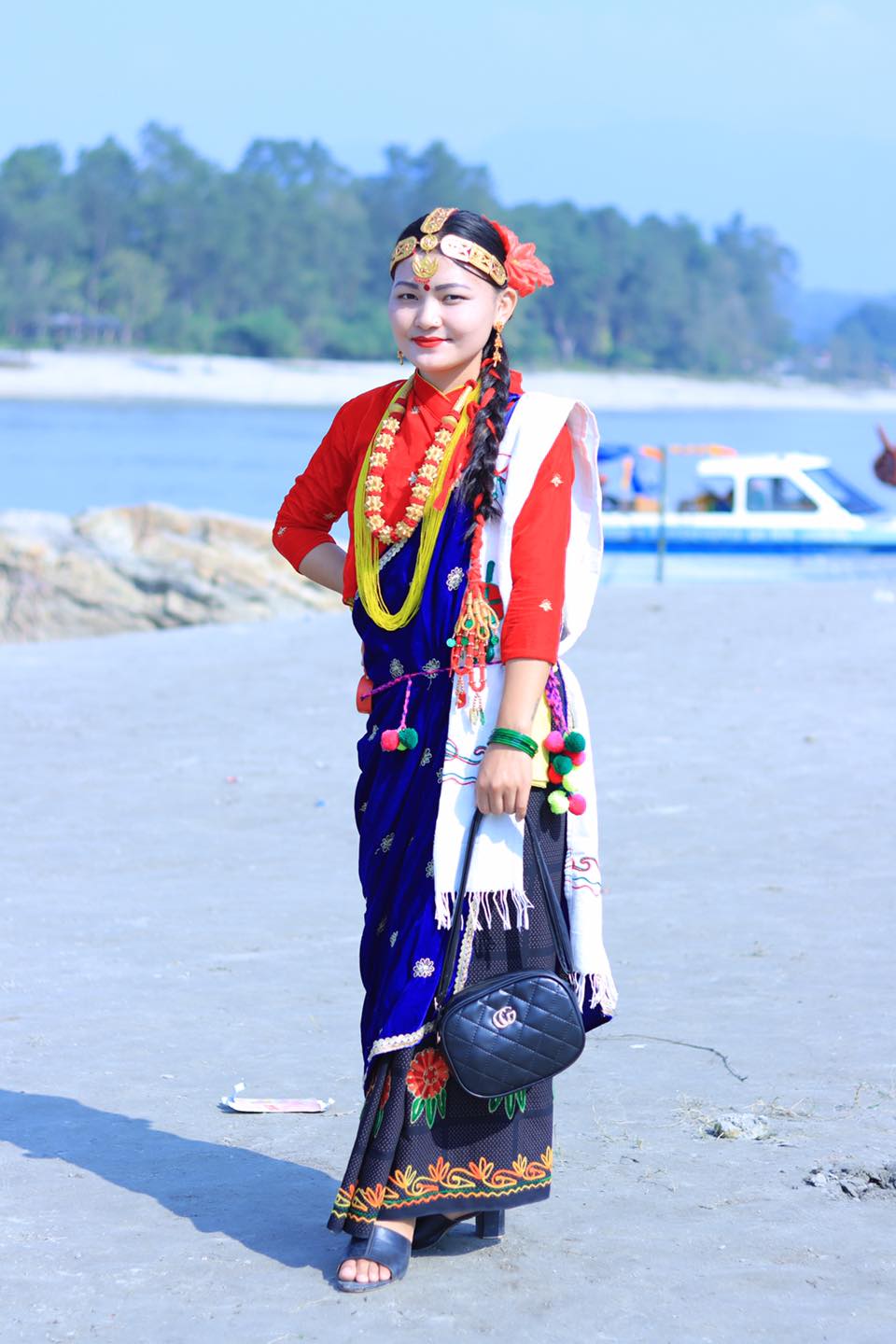
The traditional dress for Magar girls, while sharing many elements with that of adult Magar women, is particularly significant during cultural events, festivals, and family gatherings. It serves as an early introduction to their rich heritage and cultural identity.
Here’s a breakdown of the typical Magar dress for girls:
Core Garments:
- Phariya (or Lungi):
- This is the primary lower garment, a wrap-around skirt.
- For girls, it’s often made from comfortable cotton, and can be in vibrant colors like maroon, red, blue, green, or even black.
- While simpler for daily wear, ceremonial Phariyas for girls might feature subtle patterns, sometimes incorporating natural motifs.
- Chaubandi Cholo (Blouse):
- This is the traditional, fitted, double-breasted blouse that ties at the sides.
- It’s a staple for Magar girls and women.
- Colors are usually bright and complementary to the Phariya.
- Patuka (Waistband):
- A long piece of white or sometimes colored cloth wrapped snugly around the waist.
- It helps secure the Phariya and adds to the traditional aesthetic. For girls, it’s often tied neatly.
- Mujetro (Shawl/Head Covering):
- A smaller shawl or piece of fabric draped over the shoulders or, for some traditional events, gently over the head.
- It provides warmth and completes the traditional look.
Ornaments (Jewelry):
Magar girls are often adorned with traditional jewelry, though typically less elaborate and heavy than what an adult, especially a married woman, would wear. The ornaments serve as a beautiful introduction to their cultural practices.
- Pote (पोते): Strands of colorful glass beads are very common, especially green and yellow, symbolizing good fortune and marital bliss for older women, but worn for beauty by girls.
- Earrings: Simple traditional earrings, often made of silver or gold.
- Necklaces: Lighter versions of traditional necklaces, sometimes with a few silver coins or simple pendants.
- Bangles: Simple bracelets on the wrists.
- Small Nose Rings/Studs: Younger girls might wear a very small nose stud (phuli) or not wear one until they are older.
Occasions for Wearing:
Magar girls typically wear this traditional dress during:
- Festivals: Especially during Maghe Sankranti (their major festival), Dashain, Tihar, and local village festivals.
- Cultural Programs: School events, community gatherings, or traditional dance performances (like Maruni, Kaura, Salaijo) where they showcase their heritage.
- Family Ceremonies: Weddings of relatives, religious rituals, or important family celebrations.
- Photographs: For documenting family and cultural moments.
Significance for Girls:
- Cultural Identity: Wearing the traditional dress instills a sense of pride and connection to their Magar heritage from a young age.
- Learning Tradition: It’s often the first step in understanding and embodying the customs and aesthetics of their community.
- Beauty and Celebration: The vibrant colors and simple ornaments make them look beautiful and are part of the festive atmosphere of celebrations.
While everyday wear for Magar girls, especially in urban areas, has increasingly adopted modern clothing, the traditional Phariya, Chaubandi Cholo, Patuka, and symbolic ornaments remain a cherished and important part of their cultural expression during significant events.
Reviews
There are no reviews yet.