
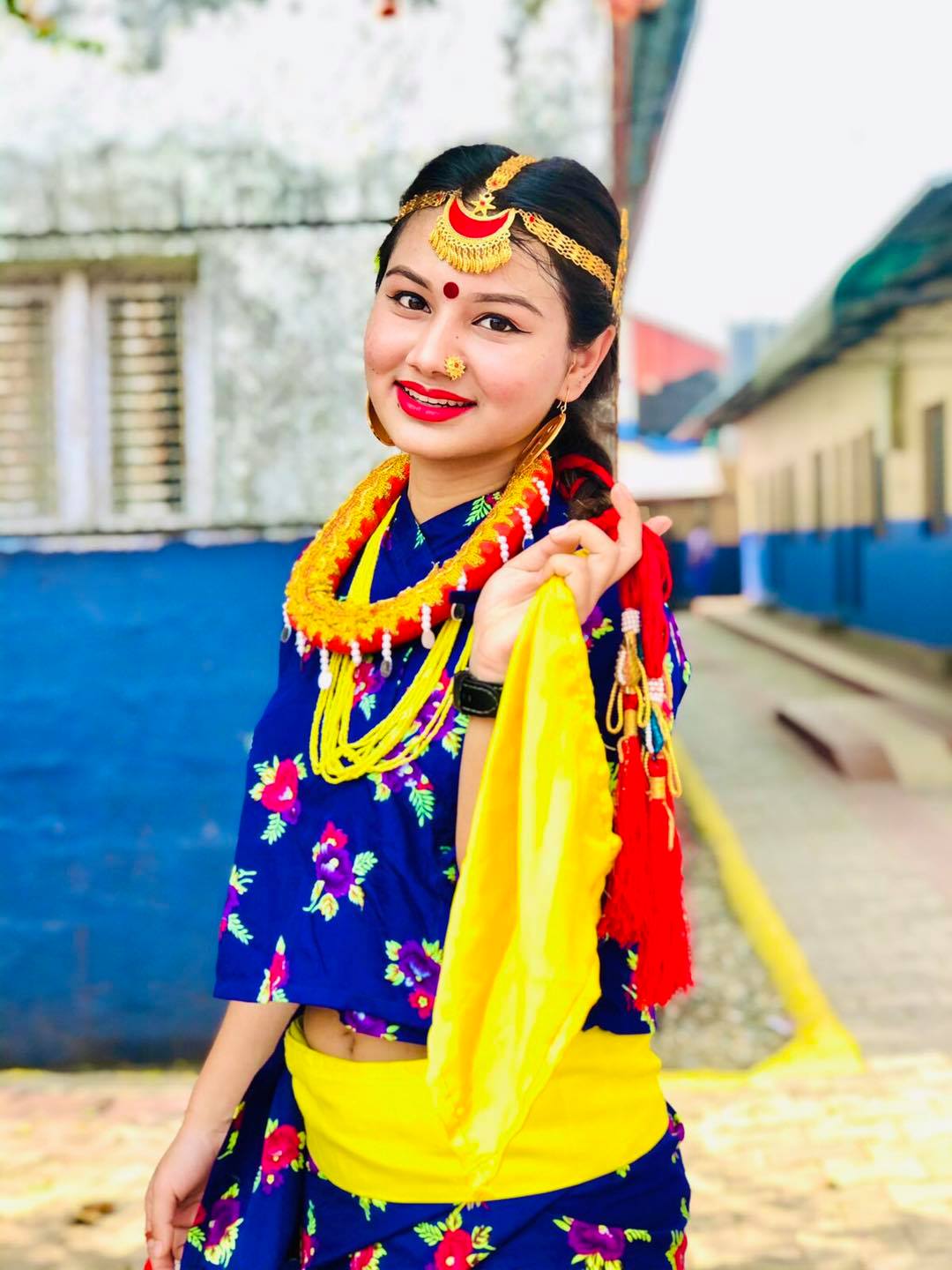
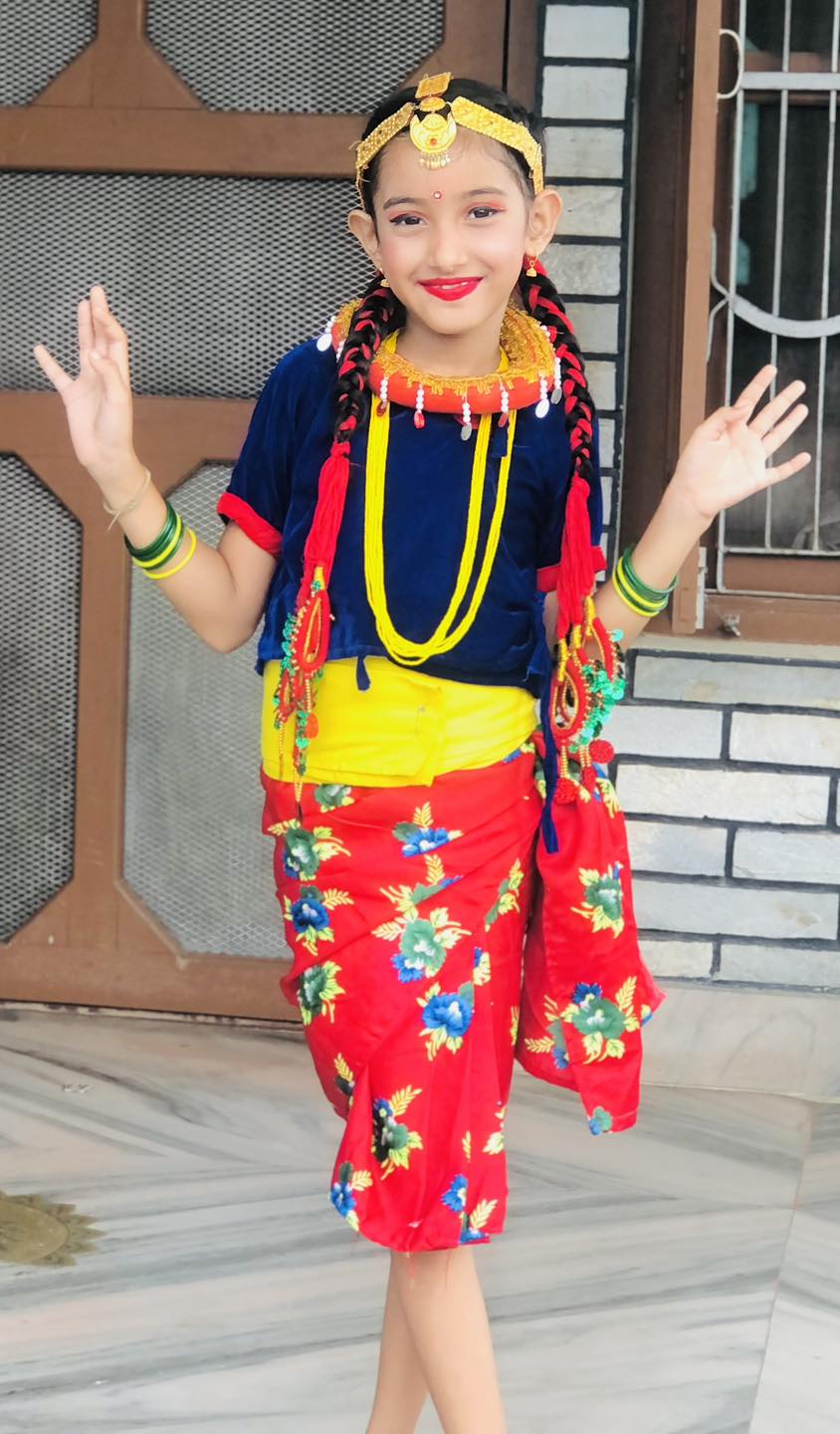
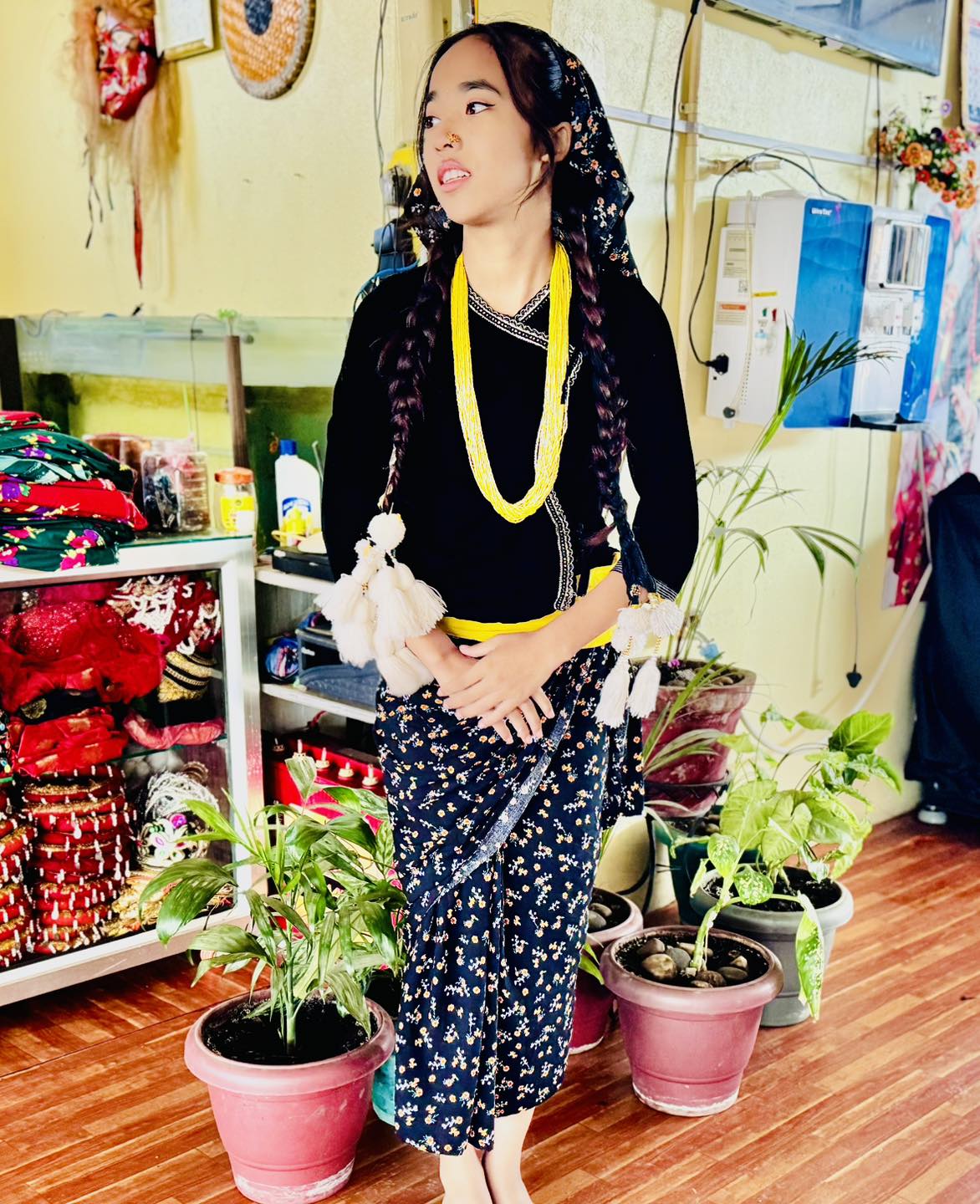
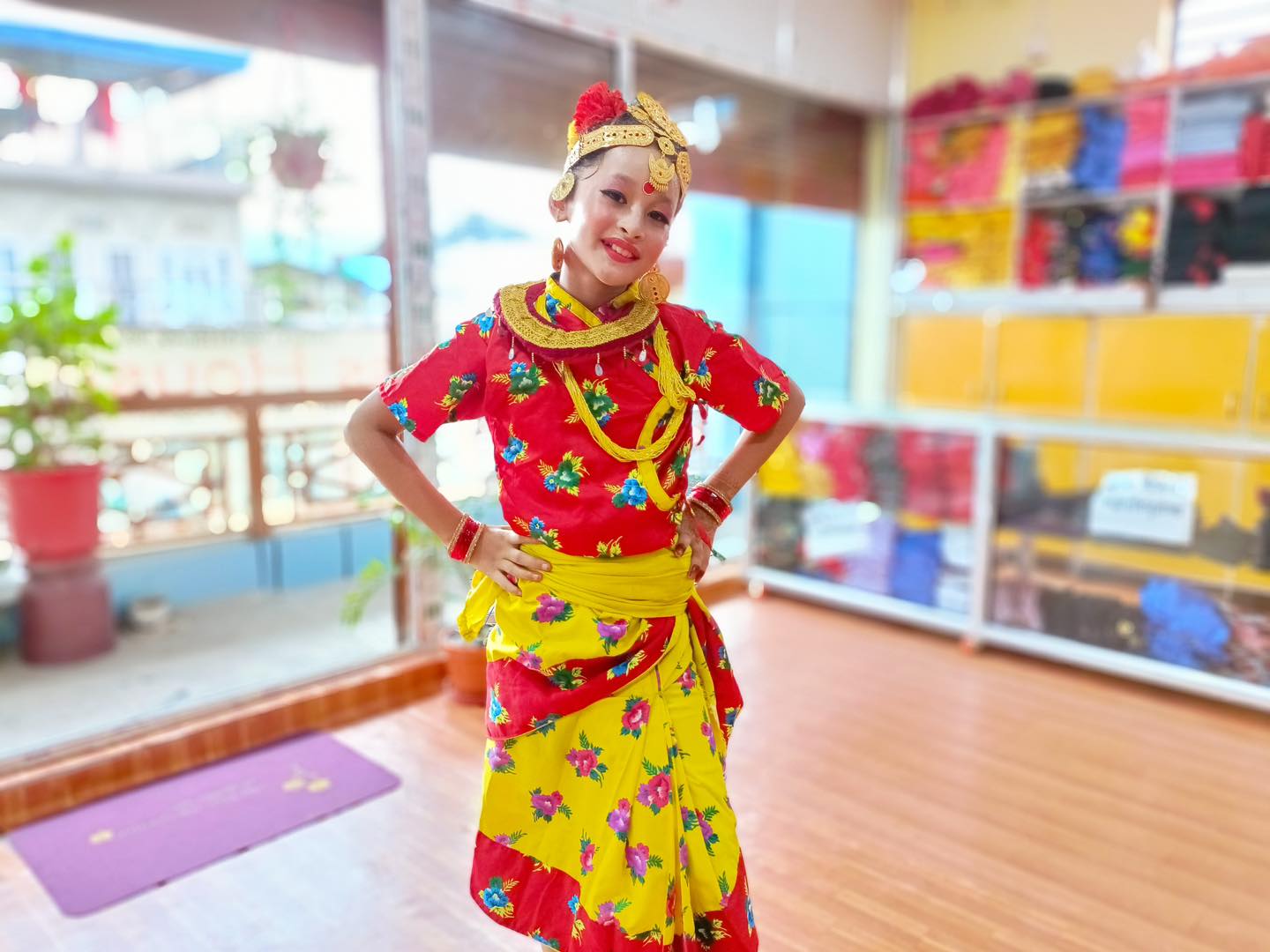
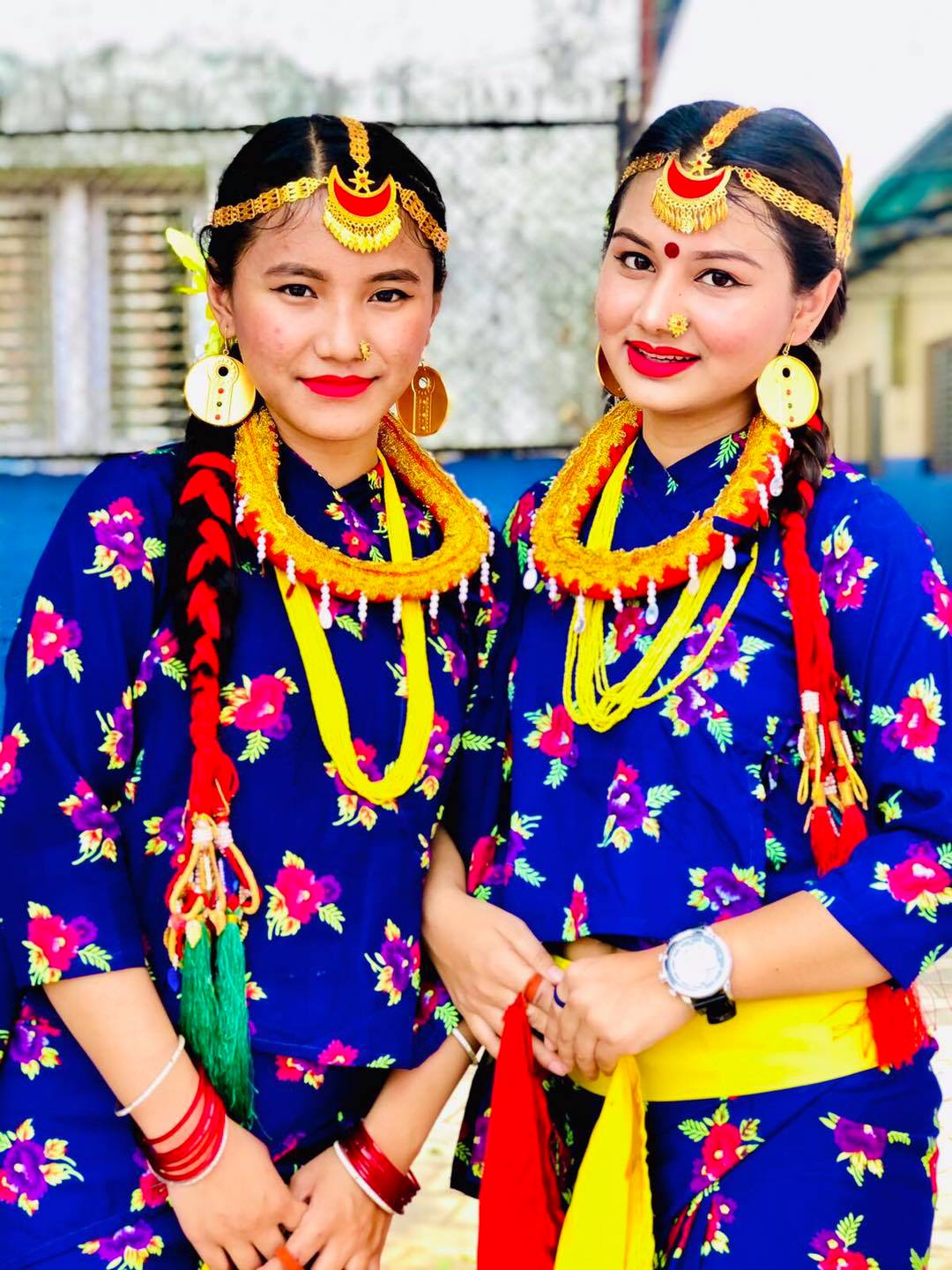
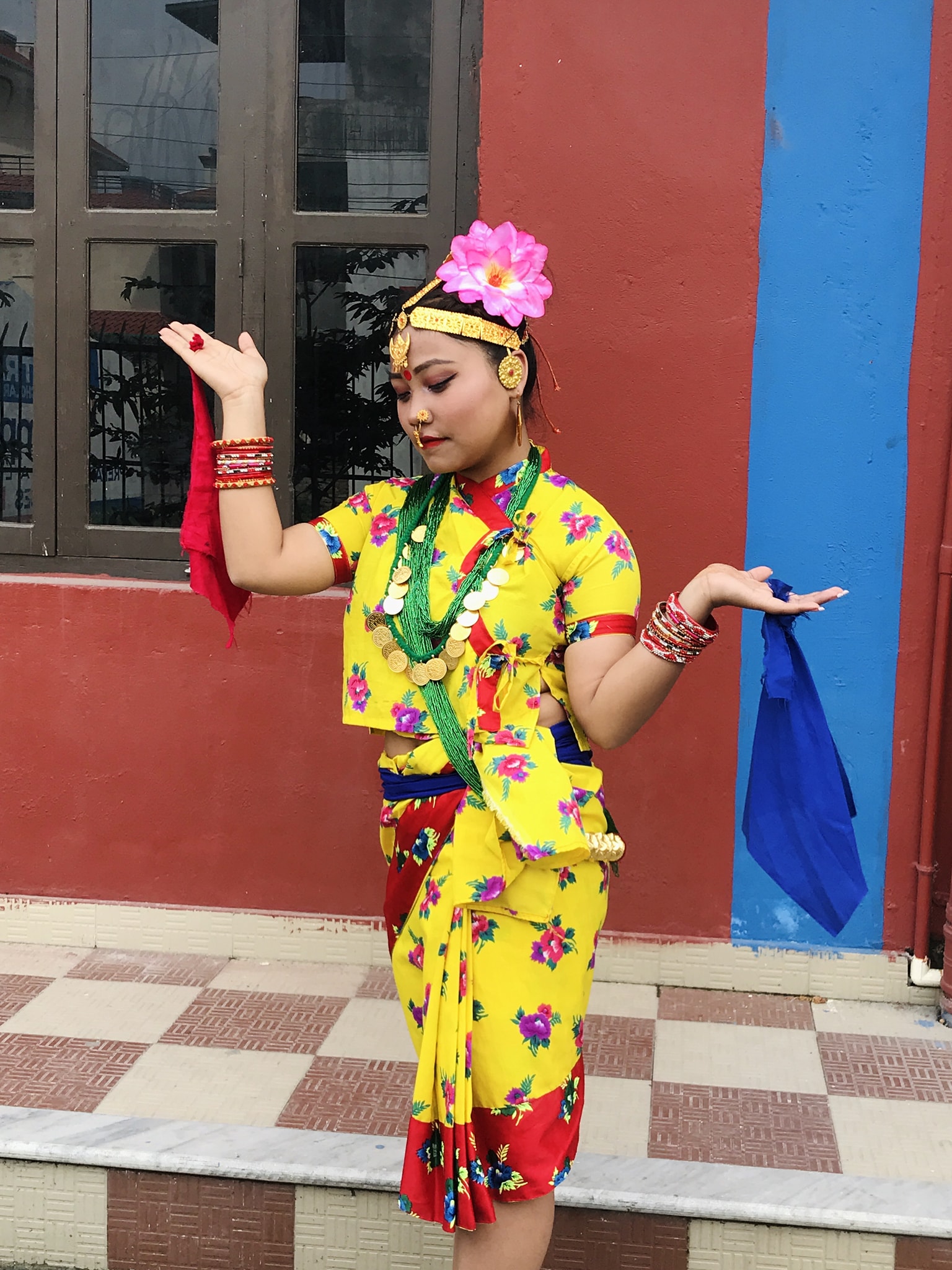
The Gunyo Cholo (गुन्यू चोलो) is a deeply significant traditional attire for young girls in Nepal. It’s much more than just a dress; it’s a symbolic ensemble intrinsically linked to a coming-of-age ceremony (often called Gunyo Cholo Pasni or Gunyo Cholo Dekhaune). This ritual marks a crucial transition in a girl’s life, signaling her move from childhood innocence towards early adolescence and her formal introduction to the traditional attire of an adult woman.
The Gunyo Cholo ceremony is primarily observed within the Khas community (including Bahuns and Chhetris), but its cultural importance has led to its adoption and celebration by many other communities across Nepal.
Components of the Gunyo Cholo:
The Gunyo Cholo traditionally comprises two main garments, typically complemented by specific accessories for the ceremony:
- Gunyo (गुन्यू):
- This is the skirt or lower garment.
- Style: It’s usually a wrap-around or a pleated skirt, designed for ease of wear for a young girl.
- Fabric and Colors: While daily wear might use simpler cotton, for the ceremonial occasion, the Gunyo is often made from more refined fabrics like cotton or silk. It’s typically vibrant, with popular colors including red, maroon, green, or blue. The fabric might be plain or feature subtle, elegant patterns.
- Distinction from Sari: It’s important to note that the Gunyo is distinct from a full sari. A sari is a long, unstitched piece of fabric draped elaborately, whereas the Gunyo is a pre-stitched skirt or a simpler wrap. It’s often seen as a precursor, symbolically preparing the girl for wearing a full sari later in her life.
- Cholo (चोलो):
- This is the blouse or upper garment worn with the Gunyo.
- Style: It’s typically a fitted blouse, very often in the style of a “Chaubandi Cholo” (चौबन्दी चोलो). A Chaubandi Cholo is a traditional Nepali double-breasted blouse that is tied with strings or loops on the sides, known for its comfortable yet elegant fit.
- Fabric and Embellishments: The Cholo’s fabric usually complements the Gunyo. For ceremonial purposes, it can be quite ornate, featuring simple embroidery, delicate border work, or attractive prints.
Accompanying Elements for the Ceremony:
For the Gunyo Cholo Pasni ceremony, the ensemble is meticulously put together with additional elements:
- Patuka (पटुका): A long piece of cloth, often in a contrasting color or white, wrapped neatly and tightly around the girl’s waist. It serves both to secure the Gunyo and to enhance the traditional aesthetic.
- Pachhyauri (पछ्यौरी): A shawl or a decorative scarf gently draped over the shoulders. This adds an elegant layer and completes the traditional look. It might match or contrast with the main garments.
- Ornaments (Jewelry): While not as heavy as adult jewelry, the girl is adorned with simple yet meaningful pieces:
- Pote (पोते): Strands of colorful glass beads, a very common and significant adornment in Nepali culture.
- Earrings and Necklaces: Simple traditional designs in gold or silver.
- Bangles: Delicate bracelets on the wrists.
- Makeup and Tika: Light, traditional makeup is applied, and a sacred tika (a dot on the forehead) is placed, signifying blessings and auspiciousness.
- Hair Styling: The girl’s hair is often neatly styled, sometimes braided, and adorned with ribbons or fresh flowers.
The Gunyo Cholo Ceremony (गुन्यू चोलो देखाउने / पसनी):
This ceremony is a momentous occasion in a Nepali girl’s life, typically held when she reaches approximately 7 to 9 years of age, before she experiences menarche (first menstruation). It carries profound cultural and symbolic significance:
- Rite of Passage: It marks a formal transition from early childhood, where younger girls might wear simpler frocks or dresses, to a stage where they are introduced to more traditional and mature forms of attire.
- Introduction to Womanhood: Symbolically, it prepares her for the roles and responsibilities she will gradually take on as she grows into womanhood. It’s her first formal donning of garments akin to those worn by adult women.
- Cultural Reinforcement: The ceremony reinforces cultural values, traditions, and the importance of preserving heritage within the family and community. It’s a moment of cultural transmission.
- Blessings and Celebrations: During the ceremony, an elder female relative (often the mother, grandmother, or aunt) helps the girl wear the new Gunyo Cholo. Family members and guests offer blessings, gifts, and well wishes for her healthy growth and prosperous future. It’s a joyous family and social event.
While modern clothing has become common for daily wear, the Gunyo Cholo remains a cherished and iconic symbol of Nepali tradition, femininity, and the beautiful rites of passage that shape a girl’s journey through life in Nepal.
Reviews
There are no reviews yet.