
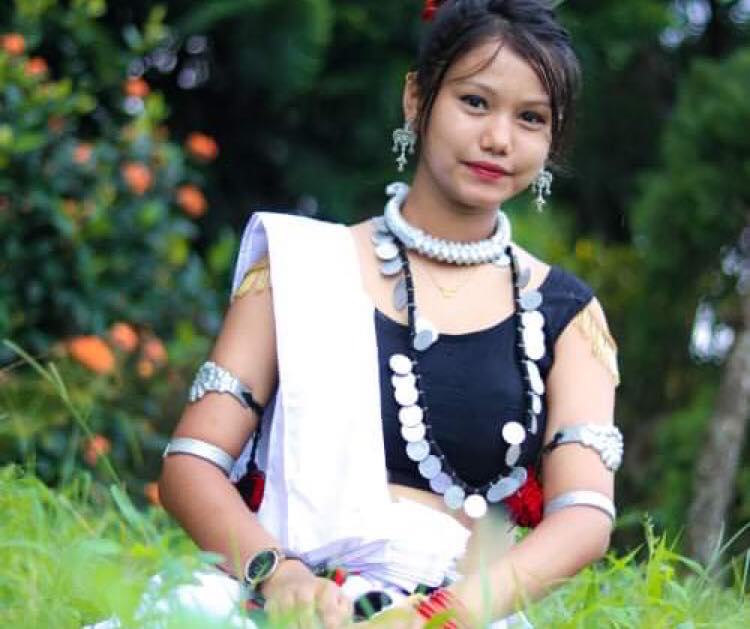

The Tharu are a prominent indigenous ethnic group of the Terai region (southern plains) of Nepal, extending into parts of India. Their cultural dress is distinctive, vibrant, and reflects their unique history, their close connection to nature, and their traditional agricultural lifestyle in the hot and humid climate of the plains.
It’s important to note that the Tharu community is diverse, with numerous subgroups (e.g., Rana Tharu, Dangaura Tharu, Morangiya Tharu, etc.), and their traditional attire can have significant regional variations in style, fabric, and ornamentation.
Here’s a general overview of the Tharu cultural dress:
For Women (Tharuni):
Tharu women’s attire is particularly striking, characterized by bright colors, intricate designs, and extensive traditional jewelry.
- Lehenga / Ghaghra (Long Skirt):
- This is a brightly colored, often heavily embroidered or printed long skirt.
- Common colors include red, blue, green, yellow, and maroon.
- The fabric is typically cotton, sometimes silk for ceremonial wear, chosen for comfort in the warm climate.
- Some specific Tharu subgroups, like the Morangiya Tharu, are known for a unique style where the “Achra” (sari-like drape) or skirt has a “Puccha” (tail-like structure) at the back, which is a distinctive marker of their identity.
- Designs often include geometric patterns, floral motifs, and traditional Tharu appliqué work, which involves sewing brightly colored patches onto a base fabric with intricate cuts and hemming.
- Choli (Blouse):
- A fitted, cropped blouse worn with the lehenga.
- It is also usually brightly colored and can be heavily embellished with embroidery, mirror work, or traditional Tharu designs.
- Sleeve length can vary from short to elbow-length.
- Achra / Sari (Draped Cloth):
- While some Tharu women wear a full sari, a common style involves a long piece of fabric (sometimes called Nahagi or Uporona) draped over the head and upper body, similar to a dupatta or a half-sari style over the lehenga and choli.
- This drape might be plain white or brightly colored with intricate patterns, sometimes hand-painted.
Ornaments (Jewelry – Gahana):
Tharu women are renowned for their elaborate and heavy silver jewelry, which is a crucial part of their cultural identity and often signifies marital status and wealth.
- Silver Jewelry: Tharu jewelry is predominantly silver, often covering various parts of the body.
- Sirbandi and Sirful: Head ornaments worn on the forehead and crown.
- Nathiya (नथिया) / Bulaki (बुलाकी) / Phuli (फुली): Prominent and often large nose rings (Nathiya, Bulaki) or smaller nose studs (Phuli).
- Kanphul (कान्फुल) / Yarling: Elaborate earrings, often large and circular.
- Hansuli (हासुली) / Kanthi (कान्ठी): Heavy, rigid silver necklaces worn around the neck.
- Matha (माथा): Wrist ornaments or bracelets.
- Tadiya (तादिया): Armlets worn on the upper arm.
- Tikuli (टिकुली): Forehead decoration (often a small ornament or bindi).
- Upairi (उपैरी): Anklets or toe rings worn on the feet.
- Pote (पोते): While colorful glass beads are worn by many communities, Tharu women might have specific styles or combinations.
Reviews
There are no reviews yet.