
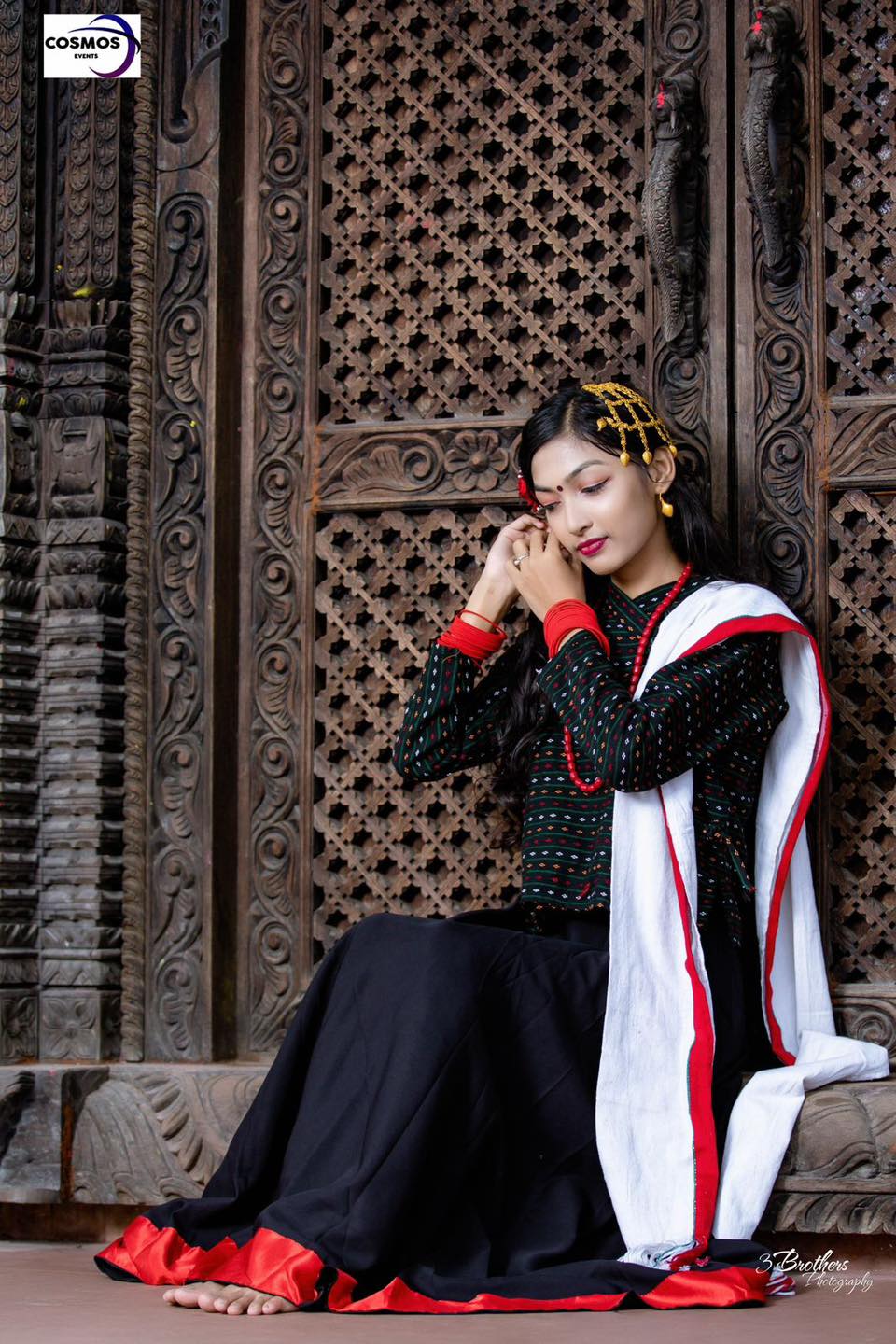
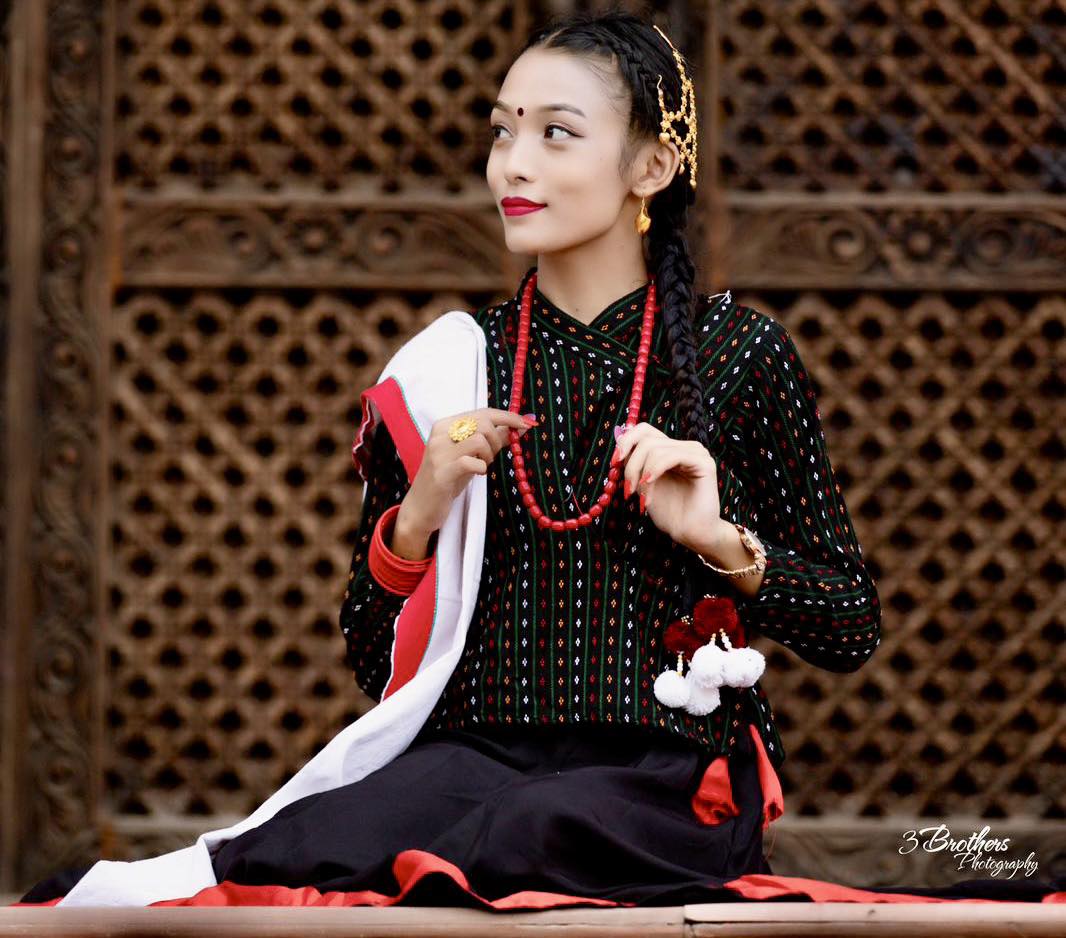
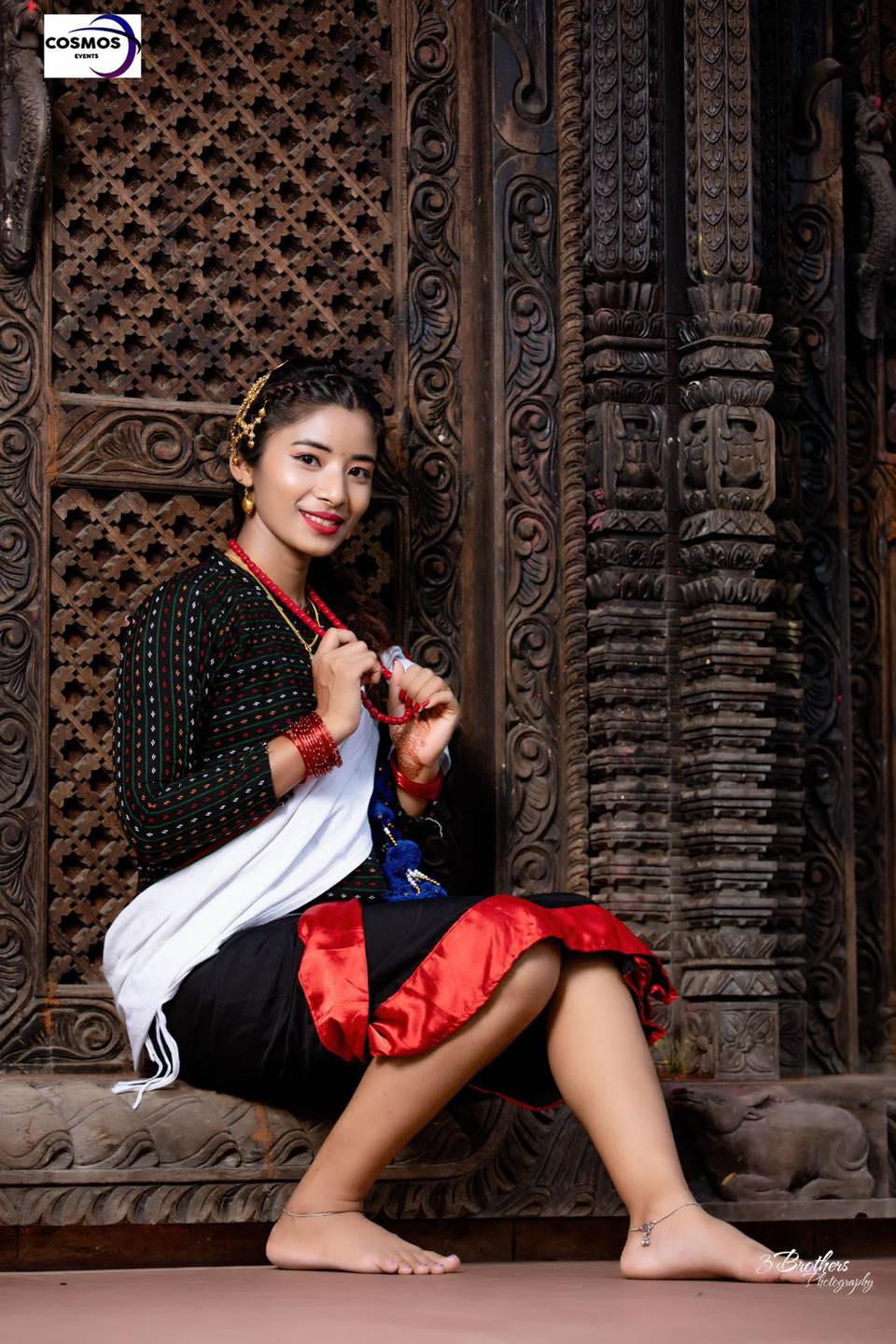
The Newar community, indigenous to the Kathmandu Valley and its surrounding areas, are known for their rich cultural heritage, intricate artistry, and unique traditions, including their distinctive traditional attire. The Newari dress is highly symbolic, reflecting their history, social structure, and religious beliefs, particularly deeply rooted in Newar Buddhism and Hinduism.
There are variations in Newari dress based on gender, age, marital status, and specific sub-groups within the Newar community, but certain elements are iconic.
For Women (Newarni):
Newar women’s attire is particularly renowned for its elegance, comfort, and the extensive use of vibrant colors and gold jewelry.
- Haku Patasi (हाकु पटासी):
- This is perhaps the most iconic traditional Newar dress for women, especially for everyday wear in traditional settings and for older generations.
- It’s a black saree with a distinctive red border. The black symbolizes protection, and the red symbolizes auspiciousness and vibrancy.
- The fabric is typically cotton, making it comfortable for daily work and the local climate. It’s draped in a specific Newari style, often with pleats gathered at the front.
- While historically for daily wear, it’s now primarily seen during festivals, cultural events, or by older women in traditional settings.
- Patuwa (पटुवा) / Jyapun Patasi (ज्यापु पटासी):
- These refer to variations of the saree, often in other colors like blue or green, or with more elaborate borders, worn by different Newar sub-groups or for specific occasions. The “Jyapun Patasi” would be worn by the Jyapu (farmer) community within the Newars.
- Chaubandi Cholo (चौबन्दी चोलो):
- A traditional, fitted blouse worn with the saree or Patasi. It’s double-breasted and tied with strings (dori) on the sides, giving it a distinctive overlapping look.
- It’s typically made from cotton or silk and can be in plain colors or with traditional Newar patterns.
- Bhau Haa (भाउ हा) / Gaa (गा):
- A long, flowing shawl or wrap worn over the Cholo and Patasi, especially during cooler weather or for more formal occasions. It can be plain or patterned.
Ornaments (Gahana – गहना):
Newar women are famous for their exquisite and often heavy gold jewelry, which is a significant indicator of wealth, status, and tradition.
- Tayoo (तयौ): An iconic and very sacred gold necklace, characterized by a central, often rectangular or cylindrical pendant (sometimes adorned with precious stones), from which numerous golden chains or elements typically hang. It often symbolizes the goddess Taleju and prosperity.
- Kantha (कण्ठा): A close-fitting necklace or choker, often made of gold with intricate designs.
- Nyapu Sikhā (न्यपु सिका) / Lunswan (लुँस्वान): Elaborate gold earrings, often large and circular, or intricately designed.
- Lakhanchā (लखन्चा) / Sinhamu: Bracelets, often made of gold.
- Chandra (चन्द्र) / Tikma (टिक्मा): Forehead ornaments, often gold, resembling a crescent moon or a decorative piece worn at the hairline.
- Dungri (डुंग्री) / Bulaki (बुलाकी): Various types of nose rings, from small studs to prominent dangling ones.
- Hamu (हामु): Finger rings.
- Bhichhuti (भिच्युटी): Toe rings worn by married women.
- Pote (पोते): Strands of colorful glass beads, a common adornment across many Nepali communities, often worn in layers.
Reviews
There are no reviews yet.