
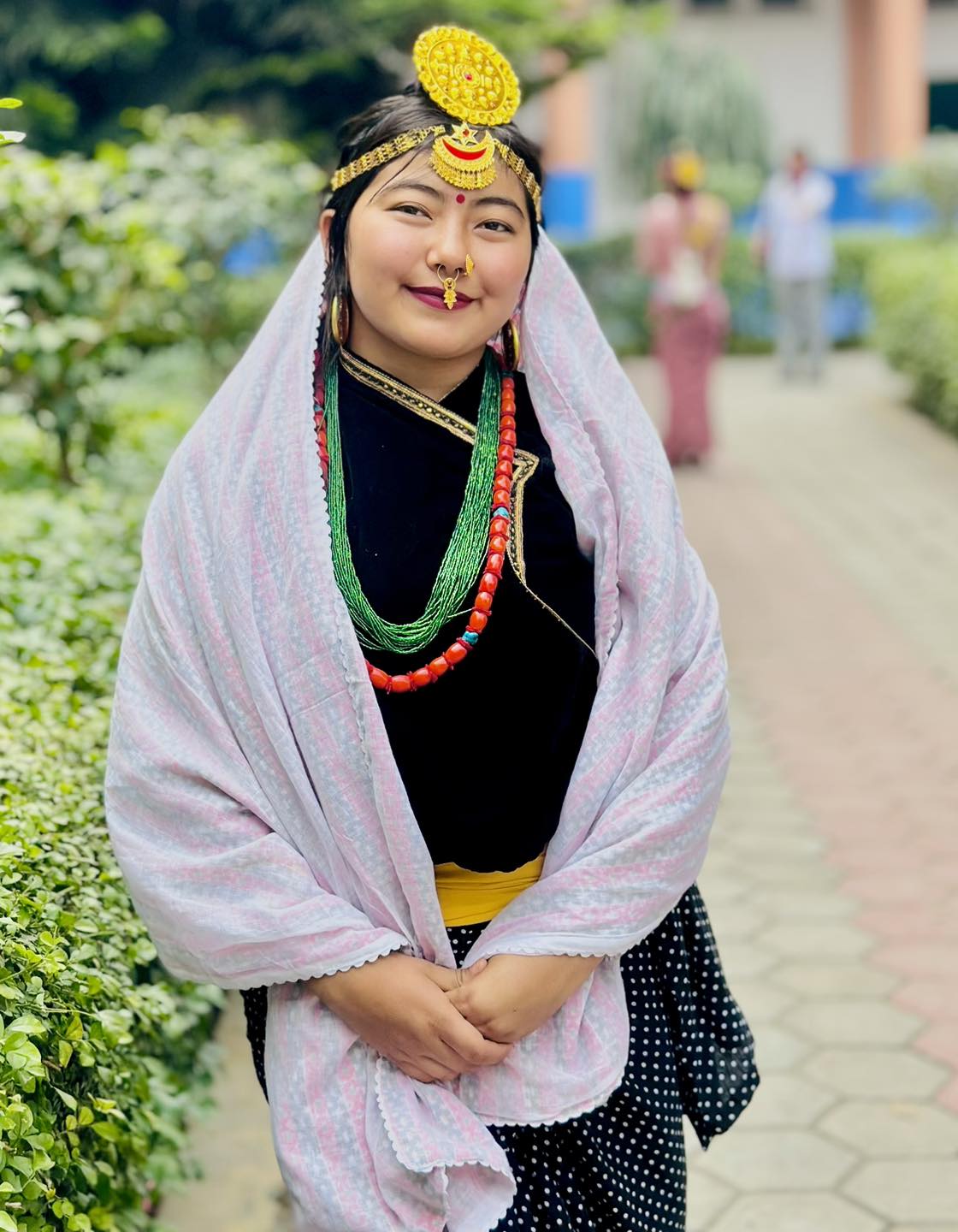
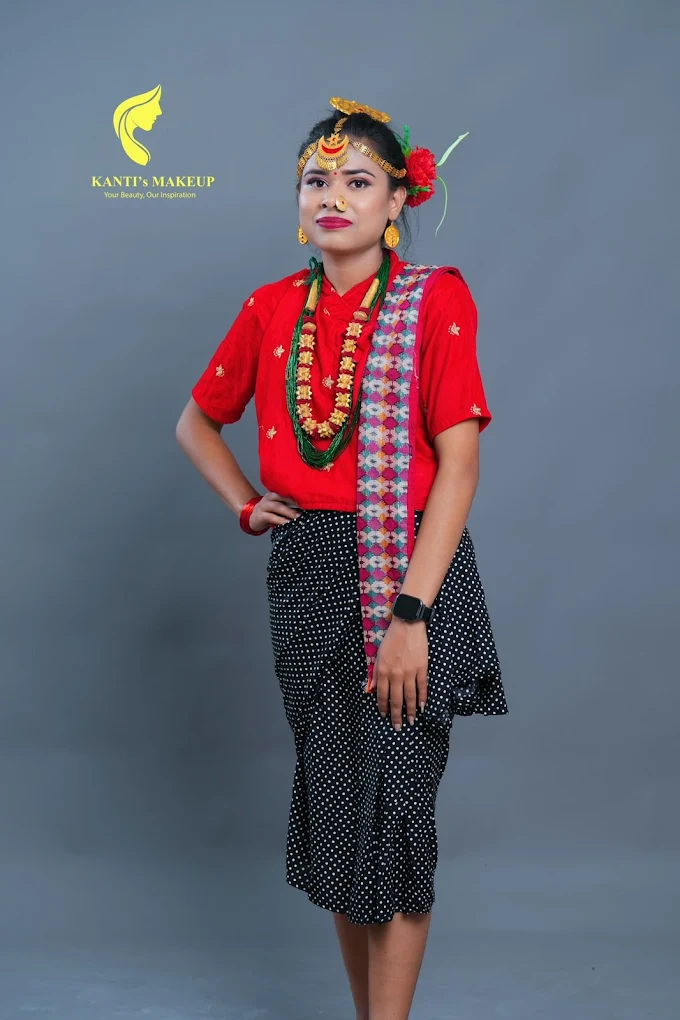
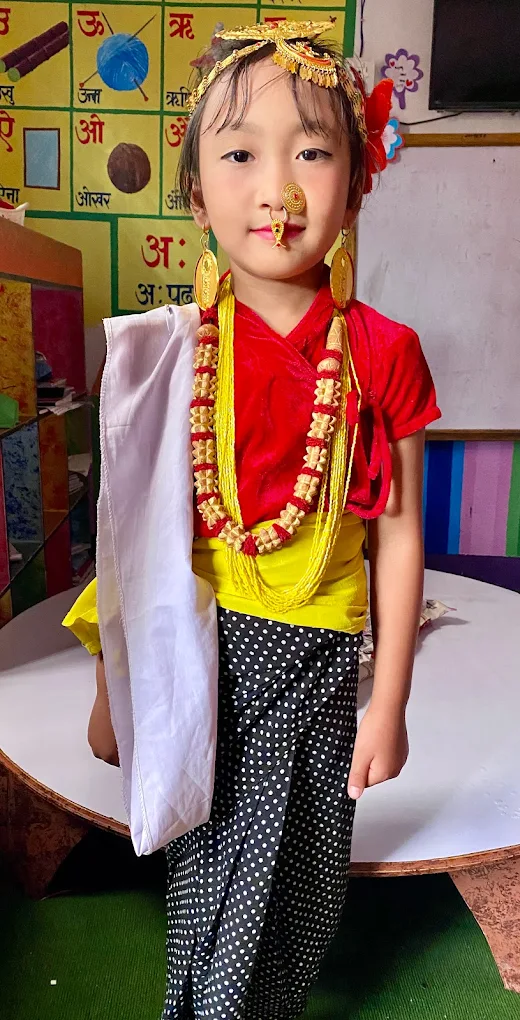
The Rai are a prominent indigenous Kirati ethnic group primarily located in the eastern hilly regions of Nepal. Their cultural dress is distinctive, vibrant, and rich in symbolism, reflecting their unique heritage, connection to nature, and traditional practices. While there are numerous Rai sub-groups (e.g., Athpahariya, Bahing, Bantawa, Chamling, Dumi, Khaling, Kulung, Lohorung, Nachhiring, Puma, Sampang, Wambule, Yamphu, etc.), and thus some variations in specific designs and embellishments, certain core elements define the broader Rai traditional attire.
Here’s a detailed overview of the Rai cultural dress:
For Women (Rai Ni):
Rai women’s traditional dress is known for its beautiful textiles, vibrant colors, and significant use of unique ornaments.
- Phariya (फरिया) / Lungi (लुङ्गी):
- This is the primary lower garment, a wrap-around skirt.
- Fabric and Colors: Traditionally made from handwoven cotton or wool. They are often brightly colored, with red, black, white, yellow, and green being common. The colors and sometimes subtle patterns can signify specific sub-groups or traditional designs.
- Draping: It’s draped in a comfortable and practical style, allowing for ease of movement.
- Chaubandi Cholo (चौबन्दी चोलो):
- A traditional Nepali blouse that is typically double-breasted and tied at the sides with strings (dori).
- Fabric: For Rai women, this is very often made from Dhaka fabric, renowned for its intricate geometric patterns and vibrant colors. The use of Dhaka adds a distinct visual richness to the blouse.
- Fit and Style: It’s a fitted garment, complementing the Phariya.
- Patuka (पटुका):
- A long, often white or contrasting colored piece of cloth, wrapped tightly around the waist.
- Function: It helps to secure the Phariya and provides support, especially during physical activity or dance. It also adds a neat finish to the ensemble.
- Ghalek (घालेक) / Ghalek Top:
- This can refer to a type of shawl or an outer garment that is often draped over the shoulders or a sleeveless/short-sleeved vest worn over the Cholo.
- Material: It might also be made of Dhaka fabric or other traditional weaves, sometimes with specific patterns.
Ornaments (गहना – Gahana):
Rai women’s jewelry is extensive, meaningful, and highly characteristic, often made of silver, gold, and various beads.
- Sirful (सिरफूल): A beautiful head ornament worn on the crown of the head, often in silver, with floral or intricate designs.
- Sirbandi (सिरबन्दी): An ornament worn on the forehead, often accompanying the Sirful.
- Yarling (यार्लिङ) / Mundri (मुन्द्री): Large, often circular or intricately designed earrings. These can be quite prominent.
- Dhungri (ढुङ्ग्री) / Bulaki (बुलाकी): Nose rings. Dhungri is generally a smaller stud or ring, while Bulaki is a more prominent, often dangling, nose ring worn from the septum or nostril.
- Kantha Mala (कण्ठमाला) / Hamel (हमेल): Various types of necklaces. Hamel is often a long, colorful beaded necklace, sometimes incorporating precious stones or silver coins.
- Pote (पोते): Strands of colorful glass beads, a common adornment across many Nepali communities, often worn in multiple layers.
- Paisa Mala (पैसा माला): Necklaces made of old silver coins, symbolizing prosperity and traditional wealth.
- Bala (बाला) / Chura (चुरा): Bangles or bracelets, often in silver or gold.
- Khurmi Khurpeto (खुर्मी खुरपेटो): Specific ornaments or a type of chain often tied or hung from the Patuka.
Reviews
There are no reviews yet.