
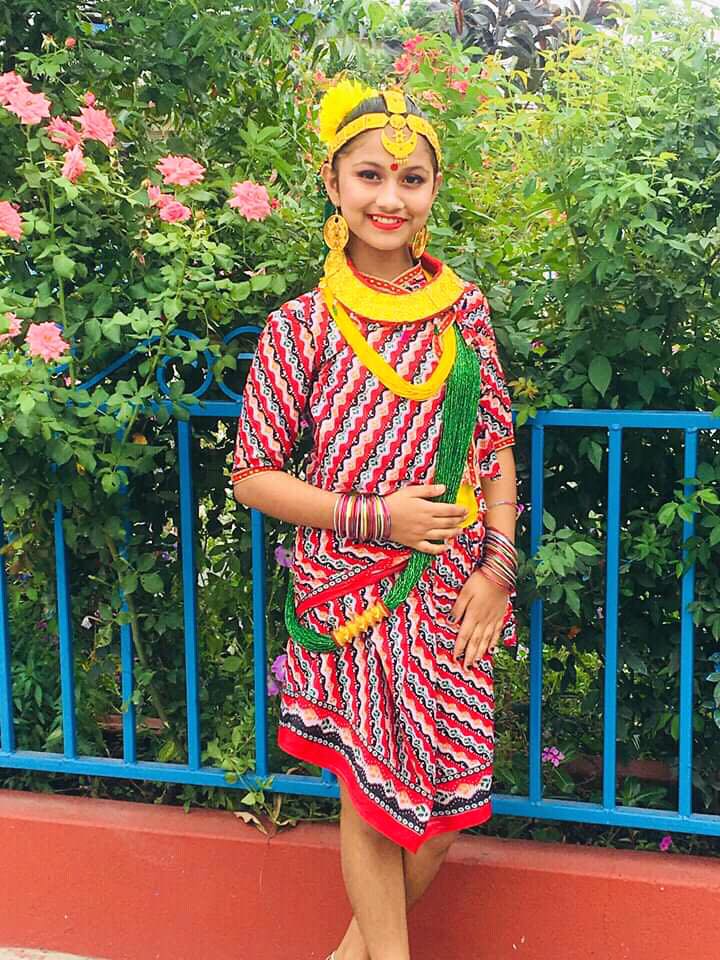
Chhetri women’s traditional dress is generally the sari (saree) and cholo (blouse), with regional and ceremonial variations.
- Sari (सारी) / Fariya (फरिया):
- A long, unstitched piece of fabric, typically 5 to 9 yards long, draped elegantly around the body over a petticoat (underskirt) and a blouse.
- Versatility: Saris come in a vast array of colors, fabrics (cotton, silk, chiffon, georgette, etc.), and designs. For daily wear in rural areas, simpler cotton saris are common. For festivals, weddings, and ceremonies, silk saris (like Banarasi, Kanjeevaram, or local Dhaka silk saris) with intricate embroidery, zari work, or vibrant patterns are preferred.
- Draping Style: While there are many ways to drape a sari, Chhetri women generally follow a standard Nepali draping style.
- Cholo (चोलो) / Blouse:
- A fitted, cropped blouse worn under the sari.
- Style: Often a Chaubandi Cholo (double-breasted, tied with strings), which is widely adopted across many Nepali communities. However, other blouse styles are also common.
- Fabric and Embellishment: Can be made from the same or contrasting fabric as the sari, and may feature embroidery or embellishments.
- Gunyo (गुन्यू) & Cholo:
- For younger girls, especially during the Gunyo Cholo ceremony (a coming-of-age ritual), the Gunyo (a traditional skirt) paired with a Cholo is the central attire. This outfit is deeply associated with Bahun and Chhetri traditions, marking a girl’s transition towards adolescence and traditional adult attire.
- Patuka (पटुका):
- A waistband, similar to men’s, sometimes worn over the sari to provide support or simply as an accessory.
- Pachhyauri (पछ्यौरी) / Shawl:
- A shawl or scarf often draped over the shoulders or head, especially in cooler weather or for modesty.
Ornaments (Gahana – गहना):
Chhetri women adorn themselves with traditional Nepali gold and silver jewelry, much like other communities in the hills.
- Pote (पोते): Strands of colorful glass beads, particularly significant for married women (often gifted during weddings).
- Tilhari (तिलहरी): A distinctive gold pendant on a string of green beads, a primary symbol of marriage for women.
- Necklaces: Various gold necklaces such as Naugedi (multi-stringed), Kantha (choker), and other traditional designs.
- Earrings: Gold earrings of various styles (Lunnswan, Dhungri, Jhumka).
- Nose Rings: Bulaki (prominent dangling nose ring) or Phuli (small nose stud), often worn by married women.
- Bangles (Chura): Gold or glass bangles worn on the wrists.
- Sirbandi and Sirful: Head ornaments for special occasions.
Significance:
- National Identity: The Daura Suruwal and Dhaka Topi, strongly associated with Chhetri men, have been designated as the national dress of Nepal, making them symbols of national identity.
- Cultural Continuity: The attire, especially for women, embodies continuity with broader South Asian traditions of sari-wearing, adapted to the Nepali context.
- Ceremonial Importance: The traditional dress is essential for religious ceremonies (like Dashain, Tihar, Teej), family events (weddings, bartaman for boys, gunyo cholo for girls), and other cultural gatherings.
- Simplicity and Practicality: While formal wear can be elaborate, daily Chhetri attire has traditionally been practical and comfortable, made from fabrics suitable for the hilly climate.
It’s important to recognize that while these elements constitute the commonly recognized Chhetri dress, modern fashion and regional specificities mean that dress choices can be diverse within the community today.
Reviews
There are no reviews yet.